Give Feedback Reps Actually Use on the Next Call
“Good call, just be more confident” gets nodded at and forgotten. Here's the structure that changes what a rep actually does next time.
No demo required · No contracts · Cancel anytime
Quick answer
Cite the specific moment in the call, name the specific behavior you observed, state the specific alternative action — then have the rep say that alternative out loud, right there, instead of just nodding along. Vague feedback like “be more confident” doesn't change behavior because it isn't tied to a repeatable action. Feedback tied to a moment, and rehearsed in the room, is what actually shows up on the next call.
Almost every sales manager gives feedback. Far fewer give feedback that shows up on the next call. The most common failure mode isn't a lack of effort — it's vagueness dressed up as encouragement: “good call, just be more confident next time,” or “you did fine, try to slow down a bit.” The rep nods, genuinely means it, and then does exactly the same thing on the next call, because nothing in that feedback told them what to actually do differently.
Why vague feedback doesn't change behavior
“Be more confident” is a judgment about a past performance, not an instruction for a future one. It doesn't specify a behavior the rep can reach for mid-call, so under the same pressure that produced the original moment, the rep has nothing new to do. Feedback only changes behavior when it's concrete enough that the rep can picture themselves doing the alternative — not just agreeing that the alternative sounds good in a debrief.
The structure: moment, behavior, alternative, say it out loud
- Cite the specific moment. A timestamp, the exact question that came in, the exact objection — specific enough the rep instantly knows what you mean.
- Name the specific behavior observed. What the rep actually said or did, not a general impression of tone or energy.
- State the specific alternative action. Not a principle — an actual line or move the rep could make instead, next time that moment happens.
- Have the rep say the alternative out loud, right there. Not agree with a nod — actually say the words, in the room, before the conversation ends.
Name the exact moment
State the alternative
Have them say it back
What this actually sounds like
- “Around minute six, when they said 'we're also looking at a competitor,' you jumped straight into a feature comparison. Instead, try asking what specifically made them start looking elsewhere first. What would you actually say there — try it now, like they just said it to you.”
- “When the economic buyer went quiet after the price came up, you filled the silence yourself with a discount. Next time, let it sit for three full seconds before you say anything. Say that back to me — what's your move in that silence?”
- “You answered the security question directly, which was right, but you didn't loop back to close the topic before moving on, so it came up again later. Try: 'does that fully answer it, or is there a follow-up before we move on?' Go ahead and say that like you're back in that moment.”
Why practicing this beats reading a coaching checklist
A manager can know this exact structure and still slip back into “good call, just tighten it up next time” under time pressure, especially in a rushed 1:1 with five other things on the agenda. This is the practice gap applied to coaching itself — knowing the GROW-style structure of good feedback and actually delivering it, specifically, in the moment, are different skills. The GROW model (see the GROW coaching model) gives the shape of the conversation; saying the specific-moment, alternative-action, say-it-back version out loud enough times is what makes it a habit instead of an intention.
Practicing coaching feedback with Frontline Coach
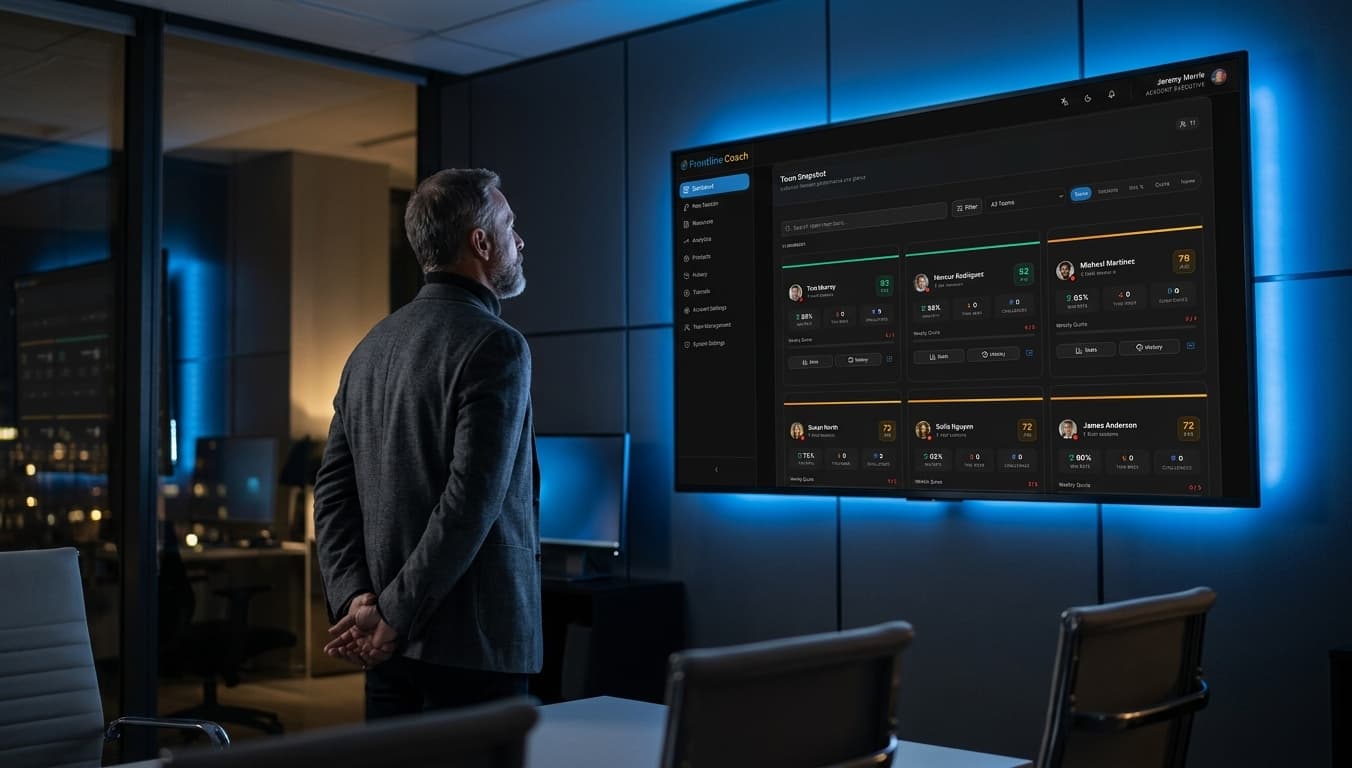
Frontline Coach's analytics dashboard scores roleplay sessions down to specific moments in a call, so a manager can point to an exact timestamp and behavior instead of relying on a fuzzy memory of a live call — turning “be more confident” into “at 4:12 you did X, try Y instead.” Managers can also assign a rep a targeted coaching challenge built around exactly the alternative behavior just discussed, so the rep practices saying it before the next real call, not just in the coaching session. See how this works alongside Frontline Coach's manager analytics. Frontline Coach starts at $9.99/mo, self-serve, no sales call required.
Frequently asked questions
Why doesn't 'good call, just be more confident' work as feedback?
Because it isn't tied to a specific, repeatable action. "Be more confident" doesn't tell a rep what to actually do differently on the next call — it's a judgment about the last call, not an instruction for the next one. Feedback only changes behavior when it names a specific moment and a specific alternative action.
What does it mean to have the rep 'say the alternative out loud'?
Instead of the manager stating the better approach and moving on, the rep repeats it back in their own words, in the room, before the coaching conversation ends. A rep who's said an alternative line out loud once is far more likely to reach for it live than a rep who just nodded along to the manager's suggestion.
How specific does the 'moment' need to be?
Specific enough that the rep instantly knows which part of the call you mean — a timestamp, the exact question that was asked, or the exact objection that came in. "Your discovery could've been stronger" is not specific. "When they said 'we're also looking at a competitor' around minute six, you moved straight to price" is.
Should coaching feedback happen right after the call or later?
As close to the call as practical, while the moment is still fresh for both people — same day is ideal. Feedback given a week later, disconnected from the actual moment, tends to feel abstract even when the structure is otherwise correct.
Does Frontline Coach help managers give this kind of specific feedback?
Yes — the analytics dashboard surfaces scored roleplay sessions down to specific moments in a call, so a manager can point to the exact timestamp and behavior instead of relying on memory or a general impression from a live call.
Keep reading
What AI Sales Roleplay Software Actually Costs
Why most of the category won't show you a price — and what Frontline Coach charges instead.
The Practice Gap: Why Reps Learn on Live Customers
The core problem Frontline Coach exists to solve, and why reading a playbook isn't the same as practicing one.
How to Practice Renewal Conversations Before They Become Churn
A practical framework for rehearsing at-risk account conversations before the real one happens.